Net Promoter Score (NPS) built for action
NPS (Net Promoter Score) is the most widely used customer loyalty metric: a simple 0–10 "likelihood to recommend" question that produces an NPS score you can track over time.
Discover the smartest
Net Promoter Score (NPS)
with HintGo
HintGo is an AI-first NPS survey tool and NPS survey software built to collect the net promoter score, understand what drives the score, and help teams act.
No credit card required.
How to calculate your Net Promoter Score
To trend your NPS score over time or compare to an NPS benchmark, you must follow the standard NPS scoring method (also called net promoter score scoring).
This section is your how to calculate NPS score guide, and the same logic used by our built-in NPS calculator.
1
Ask the NPS question
Run the same standard question in your NPS survey every time:
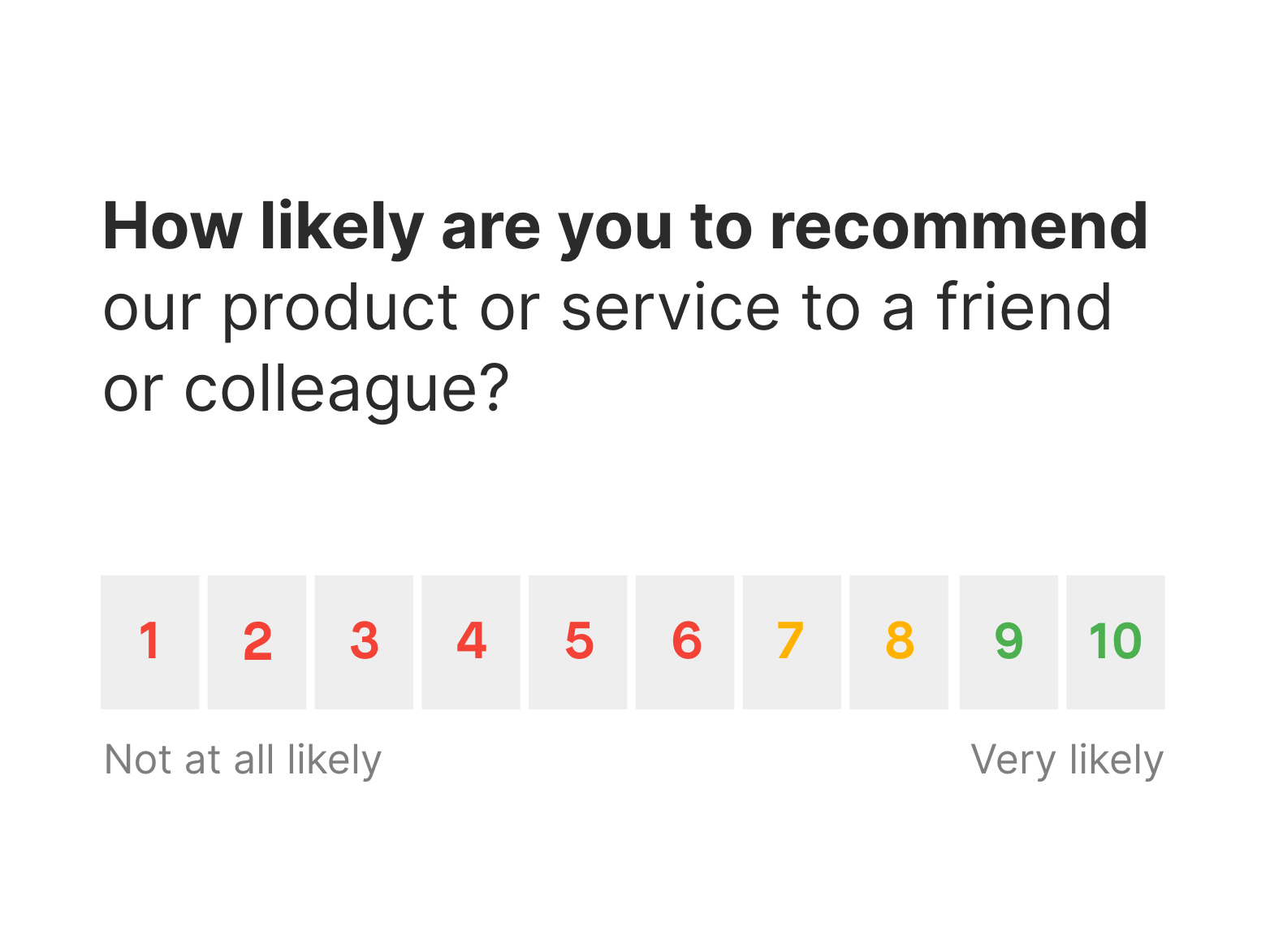
"How likely are you to recommend us to a friend or colleague?" (0–10)
No creativity is needed here—consistency is key.
2
Count responses by category
Count responses, then convert into percentages:
0–6
Detractors
7–8
Passives
9–10
Promoters
Example with 100 responses:
3
Calculate the NPS score
Subtract the % of Detractors from the % of Promoters.
NPS = % of Promoters − % of Detractors
Example:
That's the standard NPS scoring model used everywhere and the foundation of any NPS score calculator or net promoter score calculator.
Net Promoter Score (NPS) Templates
Launch faster with a proven NPS template. Every HintGo NPS survey template includes the standard net promoter score questionnaire, adaptive follow-up NPS survey questions, and built-in summaries, themes, and routing.
Here are NPS survey templates and net promoter score survey template options by use case.
HintGo vs alternatives
NPS is easy to launch with almost any tool. The real difference is what happens after the score: deeper follow ups, reliable summaries, and routing that actually closes the loop.
Standard NPS question
Follow up questions after the score
Understand the why behind the score
Summarize insights into themes
Deliver insights to owners
Ongoing effort required
Start Tracking your Net Promoter Score with HintGo
Get the score, understand the “why”, and route insights to the right team.
No credit card required.
Net Promoter Score (NPS) Best Practices
Common questions about running Net Promoter Score and how to make it successful.
How often should I run NPS?
What’s a good NPS benchmark?
Email vs in-app. When should I use each?
Use email NPS to collect feedback across your entire customer base, and in-app NPS for contextual moments like onboarding, feature adoption, or support resolution.
Many product teams tracking NPS combine both for a complete picture.
ℹ️HintGo makes this easy by allowing you to create unlimited NPS surveys with shareable links, so you can track NPS for email, in-app prompts, or specific touchpoints without friction.
How many questions should I ask?
Start with the standard NPS question, then ask follow up questions only to understand why a customer gave that score. There is no fixed number of follow ups as long as each question adds clarity.
ℹ️HintGo uses AI to tailor follow up questions in real time, helping you uncover the real drivers behind the score without overwhelming respondents.
Can I segment by plan, cohort, or account?
Yes, and you should.
Segmenting NPS by plan, cohort, account size, or lifecycle stage is what turns a single score into actionable product insight.
What are common NPS mistakes to avoid?
The most common NPS mistakes are:
- Not ask the standard question, or using a different scale of answers.
- Treating NPS as a vanity metric rather than an input for product decisions.
- Collecting scores without reviewing or acting on the feedback.
- Running NPS as a one off survey instead of a continuous program.
What should I do with detractors and passives?
Detractors should be reviewed quickly to identify churn risk and product issues, while passives often reveal opportunities for improvement that can turn them into promoters.
Both groups are more valuable than the score itself.