Customer Satisfaction Score (CSAT) that drives improvements
CSAT (Customer Satisfaction Score) measure how customers feel about a specific interaction: support, onboarding or purchase.
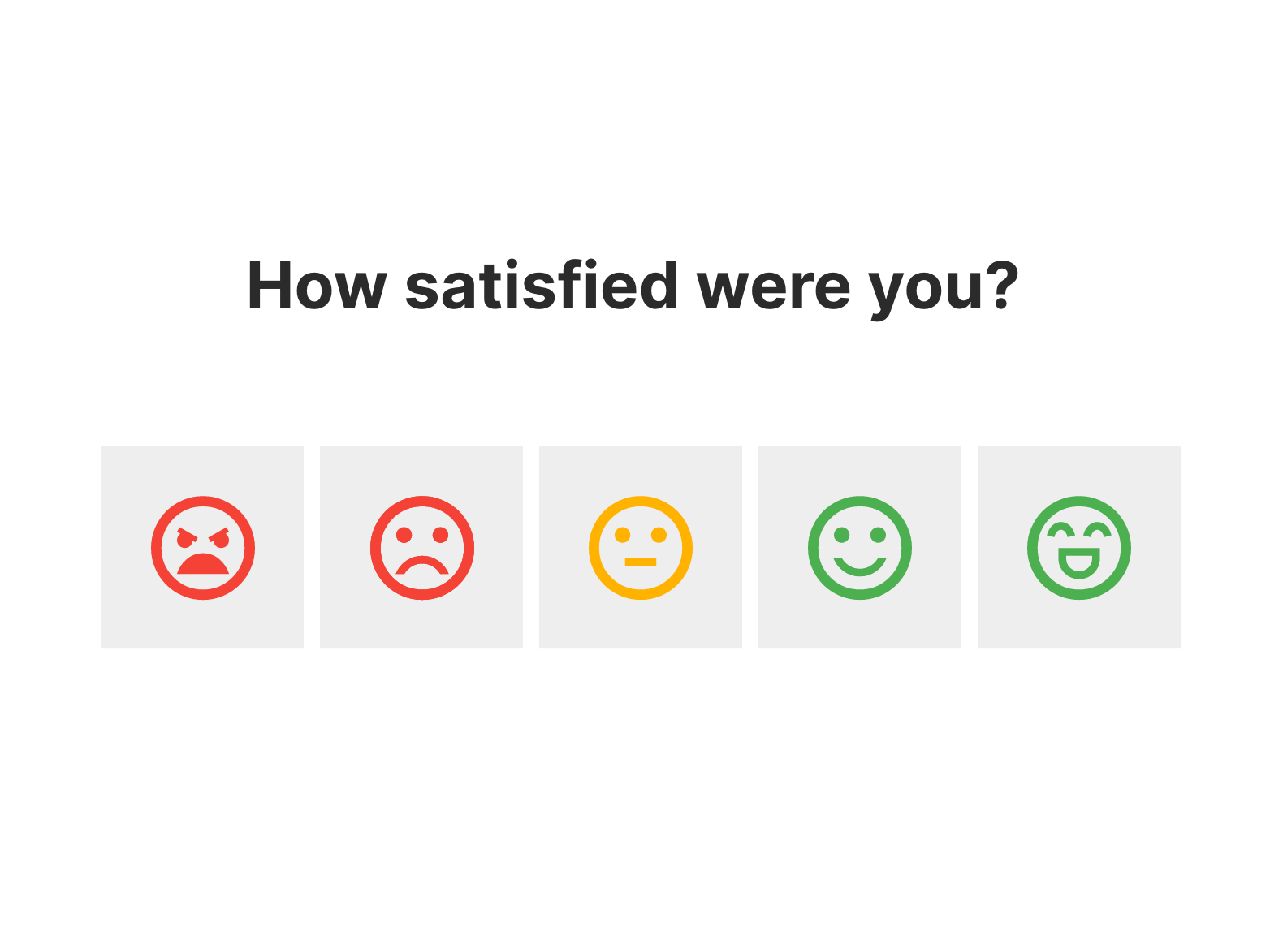
A CSAT survey typically asks one question: “How satisfied were you?” and produces a CSAT score you can track over time.
Discover the most actionable
Customer Satisfaction Score
from HintGo
HintGo is an AI-first CSAT survey tool and CSAT survey software built to collect the customer satisfaction score, understand what drives the score, and help teams act.
No credit card required.
How to calculate your Customer Satisfaction Score (CSAT)
If you want to trend your CSAT score over time or compare to a CSAT benchmark, you need a consistent CSAT scoring method (also called customer satisfaction score scoring).
This section is your how to calculate CSAT score guide—and the same logic used by our built-in CSAT calculator and CSAT score calculator.
1
Ask the CSAT question (CSAT questionnaire standard)
Run the same standard question in your CSAT survey every time. The most common CSAT questionnaire question is:
“How satisfied were you with your experience?”
Most teams use a 1–5 scale (Very dissatisfied → Very satisfied). The key for reliable CSAT scoring is consistency: use the same scale and wording across the same touchpoint (support, onboarding, post purchase, etc.).
2
Define what “satisfied” means for CSAT scoring
To calculate a consistent CSAT score, define which ratings count as “Satisfied.”
Common method on a 1–5 CSAT scale:
1–3
Not satisfied
4–5
Satisfied
Example :
3
Calculate the CSAT score (Customer Satisfaction Score scoring)
Divide satisfied responses by total responses, then multiply by 100.
CSAT score = (Number of Satisfied Responses ÷ Total Responses) × 100
Example:
That’s the standard CSAT scoring model used by most teams—and the foundation of any CSAT calculator, CSAT score calculator, or customer satisfaction score calculator.
Customer Satisfaction Score (CSAT) Templates
Launch faster with a proven CSAT template. Every HintGo CSAT survey template includes a standard customer satisfaction questionnaire, adaptive follow-up CSAT survey questions, and built-in summaries, themes, and routing.
Here are CSAT survey templates and customer satisfaction score survey template options mentioned most often by teams:
HintGo vs alternatives
CSAT is easy to launch with almost any tool. The real difference is what happens after the CSAT score: deeper follow-ups, reliable summaries, and routing that actually closes the loop.
|
Form tools
Typeform, Google Forms, SurveyMonkey
|
Feedback tools
Sprig, Pendo, Survicate
|
HintGo
|
|
|---|---|---|---|
| Standard CSAT question |
⚠️
Requires manual setup
|
✅
Standard
|
✅
Built-in
|
| Follow up questions after the score |
⚠️
Fixed follow up
|
⚠️
Fixed follow up
|
✅
AI asks multiple follow ups
|
| Understand the why behind the score |
❌
Single text response
|
❌
Single text response
|
✅
Multi-step AI questioning
|
| Summarize insights into themes |
❌
Manual analysis
|
❌
Manual analysis
|
✅
Automatic AI summaries
|
| Triage and route insights to teams |
❌
Manual triage and routing
|
⚠️
Manual triage
|
✅
Automatic triage and routing to teams
|
| Ongoing effort required |
❌
High manual effort
|
❌
High manual effort
|
✅
Mostly automated
|
Start Tracking your Customer Satisfaction Score (CSAT) with HintGo
Get the score, understand the “why,” and route insights to the right team.
No credit card required.
Customer Satisfaction Score (CSAT) Best Practices
Common questions about running a CSAT survey and how to make CSAT scoring successful.
How often should I run a CSAT survey?
Most teams run CSAT surveys continuously at high-signal touchpoints:
- CSAT survey after support (after ticket resolution)
- CSAT survey onboarding (after setup / activation)
- CSAT survey post purchase (after delivery or unboxing)
- In-product moments (after a key workflow or feature)
This approach produces more reliable trends than occasional blasts—and makes your CSAT benchmark comparisons cleaner.
What’s a good CSAT benchmark?
A good CSAT benchmark depends heavily on your industry, audience, and touchpoint. Instead of chasing a universal number, use a CSAT benchmark by industry as context, then focus on:
- improving your CSAT score over time
- comparing cohorts, plans, channels, and lifecycle stages
- separating touchpoints (support CSAT vs onboarding CSAT vs post purchase CSAT)
Email vs in-app CSAT survey form. When should I use each?
Use email CSAT surveys to collect feedback across a broader population (especially after post purchase or onboarding sequences). Use in-app CSAT surveys for contextual moments like feature usage, paywalls, or in-product support.
ℹ️HintGo makes this easy by allowing you to create unlimited CSAT survey forms with shareable links, so you can run CSAT by touchpoint without friction.
How many CSAT survey questions should I ask? (CSAT questionnaire best practices + examples)
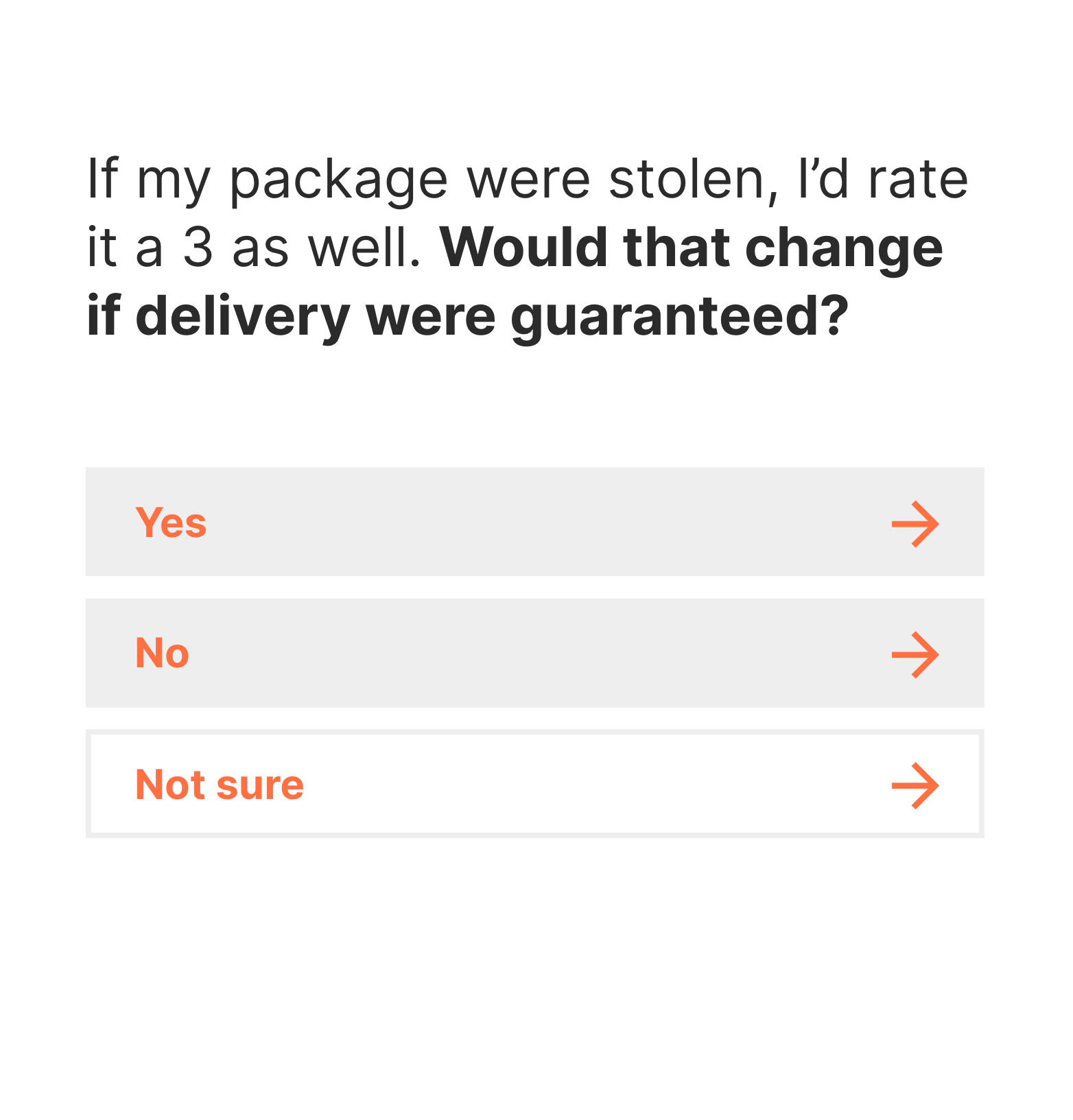
Start with one standard CSAT question, then add follow-ups only to understand why the customer chose that rating. Great follow-up CSAT survey questions examples include:
- “What’s the main reason for your score?”
- “What could we do to improve your experience?”
- “What worked well?”
- “What didn’t meet your expectations?”
ℹ️HintGo uses AI to tailor CSAT survey questions in real time, turning a basic CSAT questionnaire into an adaptive conversation.
Can I segment CSAT by plan, cohort, account, or lifecycle stage?
Yes—and you should. Segmenting CSAT by plan, cohort, account size, lifecycle stage, platform (web vs mobile app), or touchpoint (support vs onboarding vs post purchase) is how you make your CSAT score actionable for customer success and product teams.
What are common CSAT mistakes to avoid?
The most common CSAT mistakes are:
- Changing the scale or definition of “Satisfied” (breaks CSAT scoring consistency)
- Asking CSAT at the wrong time (too early or too late after the experience)
- Collecting a CSAT score without capturing the “why”
- Treating CSAT as a vanity metric instead of an input to fixes and follow-up
- Not closing the loop with low scores (especially for CSAT support)
What should I do with low CSAT scores?
Low CSAT scores should trigger fast review and action:
- route support-related issues to Support leadership
- route product friction to Product teams
- route account risk to Customer Success
- follow up with the customer when appropriate to recover the experience
Detractor-like CSAT feedback is often the fastest way to uncover churn risk—especially in SaaS, B2B, fintech, and insurance.